



Weather and When to Visit Spain
Spain's climate zones from the green Atlantic north to the hot south and the mild Canary Islands, the best months for each region, summer heat and AEMET warnings, August closures, the big fiestas month by month, the ski season, sea temperatures and why the Canaries work all year.
Last reviewed 26 Nov 2026
Spain is famous for sunshine, but its climate is far more varied than the beach postcards suggest. The north is green and rainy, the interior has hot summers and cold winters, the Mediterranean coast is mild, the south can be very hot, and the Canary Islands are warm all year. Choosing the right months for the right region makes a big difference to your trip, or to where you choose to live. This guide is a general overview as of 26 November 2026. For forecasts and warnings, always check the State Meteorological Agency, AEMET (aemet.es).
Climate zones
The Atlantic north
Galicia, Asturias, Cantabria, the Basque Country and northern Navarre have an oceanic climate: mild summers, cool winters and rain spread through the year. It is why the region is called "green Spain". Summer is the best time, with warm days that rarely get oppressively hot, though sea mists and showers are always possible. Pack layers and a light raincoat at any time of year. Bilbao and Santiago de Compostela can be wet even in summer.
The Mediterranean coast and the Balearic Islands
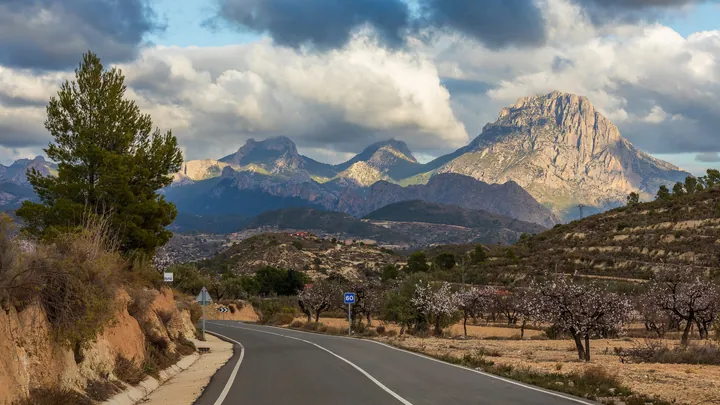
Catalonia, the Valencian Community, the Region of Murcia, the coast of Andalusia and the Balearic Islands have long, hot, dry summers and mild winters. Late summer and autumn can bring sudden, intense storms, known locally as a DANA or "gota fría", which can cause flash flooding, as the Valencia area suffered in October 2024. Spring and autumn are lovely for city breaks in Barcelona, Valencia and Palma.
The interior meseta
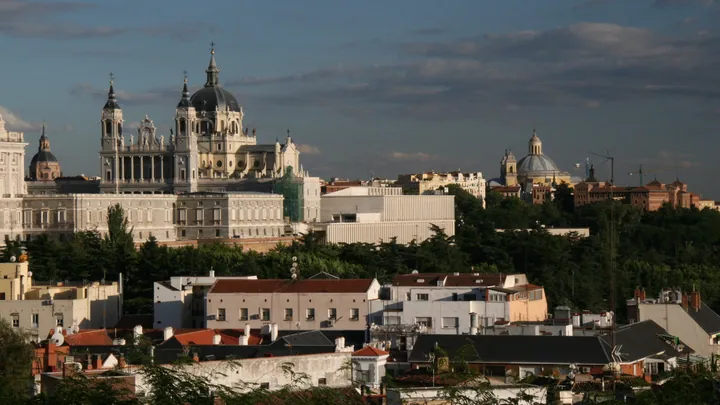
The central plateau, including the Community of Madrid, Castile and León, Castilla-La Mancha and much of Aragon, has a continental climate: hot, dry summers, cold winters with frosts and occasional snow, and big differences between day and night. Madrid is at about 650 metres above sea level, so winter nights can be freezing even when the days are sunny. Spring and autumn are the most comfortable times.
The south
Inland Andalusia, around Seville, Córdoba and Granada, is the hottest part of mainland Spain in summer, and temperatures above 40 °C are common in July and August. Winters are mild and sunny, though Granada, at the foot of the Sierra Nevada, gets cold. Spring is the classic season: orange blossom, Holy Week and the April Fair. The coast around Málaga stays milder than the interior.
The Canary Islands
The Canary Islands, off the coast of Africa, have a subtropical climate with mild temperatures all year. Winter days are often in the low 20s °C, and summers are warm rather than scorching, cooled by the trade winds. The north of each island is greener and cloudier, the south sunnier and drier. Occasional episodes of calima, hot dusty air from the Sahara, can bring haze and high temperatures. The Canaries are one hour behind the mainland all year.
Month by month
| Season | Where it shines | Things to know |
|---|---|---|
| Winter (December to February) | Canary Islands, Málaga and the Costa del Sol, Seville, ski resorts | cold in Madrid and the interior, rain in the north, short days |
| Spring (March to May) | almost everywhere, especially Andalusia, Madrid, Valencia and Barcelona | Holy Week and Easter crowds, prices rise around fiestas |
| Summer (June to August) | the north coast, the Balearics, beaches everywhere, mountains | intense heat inland and in the south, busiest and most expensive time |
| Autumn (September to November) | Mediterranean coast, the interior, Andalusia, wine regions | warm seas in September, risk of storms on the east coast, rain returns in the north |
For most travellers, late April to June and mid-September to October offer the best balance of warm weather, open attractions and fewer crowds.
Summer heat and AEMET warnings
Heatwaves are now a regular part of Spanish summers, and temperatures above 40 °C are not unusual in the interior and the south. AEMET issues warnings through its Meteoalerta system, with colours for each area:
- Yellow: a risk for certain activities, stay informed.
- Orange: significant risk, take precautions and avoid exertion in the hottest hours.
- Red: extreme risk, follow the authorities' advice.
In serious emergencies, Civil Protection can also send an ES-Alert message straight to mobile phones in the area. To cope with the heat, plan sightseeing for the morning and evening, rest in the middle of the day like the locals, drink water often, use sun cream and a hat, and never leave children or pets in a parked car. See our safety and security guide for more.
AEMET also warns of storms, strong winds, coastal events, snow and fog, so check before hiking, driving in the mountains or going out to sea.
August closures
August is the traditional holiday month in Spain. Many Spaniards leave the cities for the coast or the countryside, and in Madrid, Barcelona and other cities some family-run restaurants, shops and offices close for two to four weeks, especially around 15 August, a national holiday (the Assumption). Public services keep working, but with reduced staff. Meanwhile, beaches, coastal towns and ferries are at their busiest. If you are moving to Spain, avoid planning paperwork for August. See public holidays for the full calendar.
The big fiestas by month
Dates vary year to year, especially for movable feasts tied to Easter. Check the official city or tourism website before booking, and book accommodation early, as prices rise sharply.
| Month | Fiesta | Where |
|---|---|---|
| January | Cabalgata de Reyes, the Three Kings parades (5 January) | everywhere |
| February or March | Carnival | Santa Cruz de Tenerife, Las Palmas, Cádiz and many towns |
| March | Fallas (main days 15 to 19 March) | Valencia and the Valencian Community |
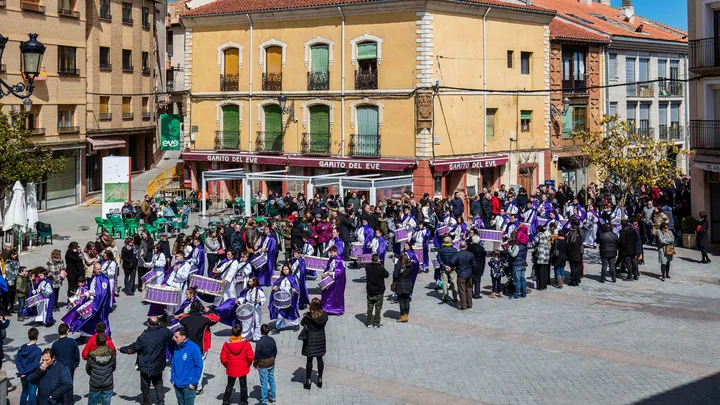
| March or April | Semana Santa, Holy Week processions | Seville, Málaga, Valladolid, Zamora and across Spain |
| April or May | Feria de Abril, about two weeks after Easter | Seville |
| April | Sant Jordi, books and roses (23 April) | Catalonia |
| May | Patios and Cruces festivals; San Isidro (15 May) | Córdoba; Madrid |
| June | Sant Joan and San Juan bonfires (night of 23 June); Hogueras | the Mediterranean coast; Alicante |
| July | San Fermín (6 to 14 July) | Pamplona |
| August | Semana Grande (Aste Nagusia); La Tomatina (last Wednesday of August, tickets needed) | Bilbao and San Sebastián; Buñol |
| September | La Mercè (around 24 September); Diada (11 September) | Barcelona; Catalonia |
| October | Fiestas del Pilar (around 12 October) | Zaragoza |
| December | Christmas markets, Nochevieja and the twelve grapes at midnight | everywhere |
Local fiestas fill the summer calendar in almost every town and village. See the events page for what is coming up near you.
Ski season
Spain has excellent skiing. The main areas are the Pyrenees (Baqueira-Beret in Catalonia, Formigal and Candanchú in Aragon, La Molina and others), the Sierra Nevada near Granada, one of the most southerly ski resorts in Europe, and smaller resorts in the Cantabrian Mountains and the Sistema Central near Madrid. The season usually runs from about December to April, depending on snow. In spring you can ski in the Sierra Nevada in the morning and reach the coast in the afternoon.
Sea temperatures
Sea temperatures vary by coast and by year, so take these as rough guides:
- Mediterranean and Balearics: cool in winter and spring, warming through summer to its warmest in August and September, when it is comfortable for long swims.
- Atlantic north: noticeably cooler even in August, refreshing rather than warm.
- Atlantic south (Cádiz, Huelva): warmer than the north, but cooler than the Mediterranean, with strong winds on parts of the coast near Tarifa.
- Canary Islands: fairly steady all year, coolest in late winter and warmest in early autumn.
Lifeguards and beach flags usually operate only in the bathing season, which each town sets, so take extra care outside it.
The Canaries all year
The Canary Islands are the place to find warm weather in Spain from November to March. Tenerife, Gran Canaria, Lanzarote, Fuerteventura and La Palma each have their own character, from volcanic landscapes and stargazing to long sandy beaches. Winter is high season, so book early around Christmas and Carnival. Summer is warm and windy, especially on the eastern islands, and great for windsurfing and kitesurfing. If you live there, note that the Canaries use IGIC instead of IVA and have their own time zone.
Planning tips
- Check the AEMET forecast and warnings for your exact area before you travel, and again daily during heatwaves or storms.
- Plan around long weekends and regional holidays with the holiday planner, as prices and crowds rise.
- Pack for the region, not the country: a coat for Madrid in January, a raincoat for Galicia in July.
- Visitors from outside the EU should check entry rules, see our post on entering Spain in 2026 and the Schengen 90/180 calculator.
Frequently asked questions
What is the best month to visit Spain?
For most of the country, May, June, September and October offer warm weather with fewer crowds and less heat than July and August. For winter sun, choose the Canary Islands or the Costa del Sol.
Is it too hot to visit Seville or Madrid in summer?
It can be. July and August often bring temperatures above 35 °C in Madrid and above 40 °C in Seville and Córdoba. If you go, sightsee early and late, rest at midday and follow AEMET heat warnings.
Where is warm in Spain in winter?
The Canary Islands are the warmest, with mild days all year. The Mediterranean coast around Málaga, Almería and Alicante is also mild and sunny, though evenings are cool.
Do things close in August in Spain?
Some family-run shops, restaurants and offices in big cities close for part of August, and many offices work shorter hours. Tourist attractions, big shops and beach areas stay open and are at their busiest.
When is the ski season in Spain?
Usually from about December to April, depending on snow. The main resorts are in the Pyrenees and the Sierra Nevada near Granada.
More questions
Can I drive in Spain on my foreign licence?
EU and EEA licences are valid in Spain for as long as they are in date. Visitors with other licences can drive with their national licence, plus an International Driving Permit where the DGT requires one. Once you become resident, a non-EU licence is valid for only six months: after that you must exchange it at the DGT, if Spain has an exchange agreement with the issuing country (as it does with the UK), or pass the Spanish driving test. Spain drives on the right, the drink-drive limit is 0.5 g/l of blood (0.3 g/l for new and professional drivers), and the emergency number is 112.
Daleel ES is a guide, not legal, financial or immigration advice. Rules change; confirm with the authority named before you act. Spotted an error? Tell us.